Celery vs Bull Comparison 2026
Celery is a leafy vegetable consumed by humans for nutrition, while a bull is a large domesticated bovine animal used for breeding, meat production, and labor. These are entirely different organisms from different kingdoms with no direct comparison basis.
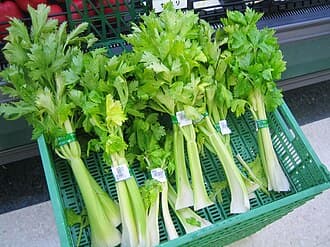
Celery
Distributed asynchronous task queue for Python applications
Health-conscious individuals, people on calorie-restricted diets, vegetarians seeking low-calorie vegetables, and those needing hydration-rich foods.

Bull
An intact male bovine animal (Bos taurus) raised for meat production, breeding, and agricultural work.
Individuals requiring high protein intake, athletes, people with iron deficiency anemia, farmers needing livestock for work and meat production, and those following carnivore or high-protein diets.
Quick Answer
AI SummaryCelery is a leafy vegetable consumed by humans for nutrition, while a bull is a large domesticated bovine animal used for breeding, meat production, and labor. These are entirely different organisms from different kingdoms with no direct comparison basis.
Our Verdict
AI-assistedThis comparison is fundamentally illogical as celery and bull exist in different biological kingdoms and serve entirely different purposes. Celery is a low-calorie vegetable ideal for salads, soups, and snacks, while bulls are livestock animals providing meat, dairy products, and agricultural labor. Choose celery for nutritious, low-calorie eating; choose bulls for protein-rich meat production and farm work.
Was this verdict helpful?


Choose Celery if
Best pickHealth-conscious individuals, people on calorie-restricted diets, vegetarians seeking low-calorie vegetables, and those needing hydration-rich foods.
Choose Bull if
Individuals requiring high protein intake, athletes, people with iron deficiency anemia, farmers needing livestock for work and meat production, and those following carnivore or high-protein diets.
Track this comparison
Get notified when prices change, new specs ship, or our verdict updates.
Triggers: price change new spec verdict update
No spam. Stop anytime.
Key Differences at a Glance
- Organism Classification:Plant (Apium graveolens) vs Animal (Bos taurus)
- Calories per 100g:✓ Celery wins(16 calories vs 250 calories (beef))
- Protein Content per 100g:✓ Bull wins(26g vs 0.7g)
Key Facts & Figures
58 numeric metrics compared
| Metric | Celery | Bull | Ratio |
|---|---|---|---|
| Minimum RAM Requirement(GB) | 10-50MB (minimal) | — | — |
| Setup Time (Basic)(minutes) | 30-60 minutes | — | — |
| Project Maturity (Years Active)(years) | 20+ years (2004-present) | — | — |
| Setup Complexity (1-10)(difficulty) | 7 | — | — |
| Industry Adoption Rate(percent) | 78% of task queue users (survey of 2,400 Python devs) | — | — |
| Task Execution Latency(ms) | 50-100ms | — | — |
| Initial Learning Time(hours) | 20-40 hours | — | — |
| Production Deployments Worldwide(estimated count) | 100,000+ | — | — |
| Calories per 100g(kcal) | 16 kcal | 250 kcal | |
| Protein Content(grams per 25g scoop) | 0.7g | 26g | |
| Vitamin K Content(% Daily Value per 100g) | 66% | 0% | |
| Iron Content(mg per 100g) | 0.4mg | 2.6mg | |
| Water Content(%) | 95% | 62% | |
| Retail Price(USD) | $0.79 | $3.50 | |
| Average Lifespan(Years) | 2 years (cultivated) | 20 years | |
| Water Required to Produce(gallons per pound) | 37 gallons | 1,800 gallons | |
| Result Backend Options(count) | 5+ backends | — | — |
| Installation Footprint(MB) | ~15 MB | — | — |
| Transitive Dependencies(packages) | ~20 dependencies | — | — |
| Time to First Working Setup(minutes) | 30-60 minutes | — | — |
| Memory Per Worker Process(MB) | 40-80 MB | — | — |
| Time to Basic Setup(minutes) | 30-45 minutes | — | — |
| Retry Strategies Available(count) | 10+ built-in strategies | — | — |
| Memory Usage at Idle(MB) | 45-80 MB | — | — |
| Setup Time for Hello World(minutes) | 5-10 minutes | — | — |
| Pre-built Integrations/Operators(count) | ~50 core integrations | — | — |
| Production Deployments (Estimated)(count) | 100,000+ | — | — |
| Setup Complexity (Configuration Files Required)(count) | 2-3 (app.py, celery.py, message broker config) | — | — |
| Time to Deploy First Task (Minutes)(minutes) | 10-15 minutes with Redis | — | — |
| Web UI Completeness(features) | 4 core features (task list, worker status, stats, task details) via Flower optional add-on | — | — |
| Enterprise Adoption (Fortune 500 Users Reported)(count) | Spotify, Instagram, Stripe, Booking.com (estimated 30+ F500) | — | — |
| Default Message Broker Options(count) | 3 primary (Redis, RabbitMQ, AWS SQS) | — | — |
| Minimum Memory Per Worker (MB)(MB) | 50-100 MB baseline | — | — |
| Community Repository Stars (as of Feb 2025)(stars) | 50,600 GitHub stars | — | — |
| Job Throughput Capacity(jobs/second/worker) | 500-1000 | — | — |
| Memory Usage per Worker(MB) | 150-300 | — | — |
| Supported Brokers(count) | 5+ (RabbitMQ, Redis, SQS, Kombu, others) | — | — |
| Setup Time (Minutes)(minutes) | 30-60 (broker + workers + config) | — | — |
| Project Age(years) | 15+ | — | — |
| Startup Time per Worker(seconds) | 3-8 | — | — |
| Language Support Count(languages) | 7 languages | — | — |
| Message Broker Options(brokers) | 3+ brokers (RabbitMQ, Redis, SQS, Kafka) | — | — |
| Setup Time (estimated)(minutes) | 45–90 minutes | — | — |
| GitHub Stars(stars) | 24,800+ stars | — | — |
| Task Result Backend Options(backends) | 4+ backends | — | — |
| GitHub Stars (Community Size)(stars) | 52,000+ stars | — | — |
| First Release Year(year) | 2009 | — | — |
| Task Throughput (Redis Backend)(tasks/sec) | 10,000 tasks/sec | — | — |
| Third-Party Extensions Available(plugins) | 200+ plugins | — | — |
| Documentation Pages Indexed(pages) | 1,200+ pages | — | — |
| Initial Setup Time(minutes) | 45-60 minutes | — | — |
| Memory Consumption Per Worker(MB) | 80-150 MB | — | — |
| Job Throughput(jobs/second) | 2,500-4,000 | — | — |
| GitHub Stars (as of 2026)(thousands) | 52,400+ stars | — | — |
| Setup Time to Hello World(minutes) | 5-10 minutes | — | — |
| Baseline Memory Usage(MB) | ~75 MB | — | — |
| Maximum Supported Tasks per Workflow(tasks) | Unlimited (bottleneck: broker capacity) | — | — |
| GitHub Stars (2026)(stars) | 25,400 stars | — | — |
Sourced from publicly available data ·
Key Differences
7 attributes compared head-to-head
- Plant (Apium graveolens)Organism ClassificationAnimal (Bos taurus)
- 16 calories(winner)Calories per 100g250 calories (beef)
- 0.7gProtein Content per 100g26g(winner)
- 95%(winner)Water Content60-65%
- 2 years (cultivated)Average Lifespan18-22 years(winner)
- $0.79(winner)Market Price per Pound (USD)$3.50 (average beef)
- 0.4mgIron Content per 100g2.6mg(winner)
- Organism Classification
Celery
Plant (Apium graveolens)
Bull
Animal (Bos taurus)
- Calories per 100g
Celery
16 calories(winner)
Bull
250 calories (beef)
- Protein Content per 100g
Celery
0.7g
Bull
26g(winner)
- Water Content
Celery
95%(winner)
Bull
60-65%
- Average Lifespan
Celery
2 years (cultivated)
Bull
18-22 years(winner)
- Market Price per Pound (USD)
Celery
$0.79(winner)
Bull
$3.50 (average beef)
- Iron Content per 100g
Celery
0.4mg
Bull
2.6mg(winner)
Full Comparison
| Attribute | Celery | Bull |
|---|---|---|
| Minimum RAM Requirement(GB) | 10-50MB (minimal) | — |
| Setup Time (Basic)(minutes) | 30-60 minutes | — |
| Setup Complexity (1-10)(difficulty) | 7 | — |
| Time to First Working Setup(minutes) | 30-60 minutes | — |
| Time to Basic Setup(minutes) | 30-45 minutes | — |
| Setup Time for Hello World(minutes) | 5-10 minutes | — |
Show 2 more attributesSetup Time (Minutes)(minutes) 30-60 (broker + workers + config) — Setup Complexity for New Projects(configuration steps) 7-10 steps (broker, serializer, worker config required) — | ||
| Cloud Pricing (Task Runs)(USD per million runs) | Self-hosted (no usage fees) | — |
| Retail Price(USD) | $0.79(winner) | $3.50 |
| Project Maturity (Years Active)(years) | 20+ years (2004-present) | — |
| Kubernetes Native Support(boolean) | Possible (requires manual config) | — |
| Setup Complexity (Configuration Files Required)(count) | 2-3 (app.py, celery.py, message broker config) | — |
| Time to Deploy First Task (Minutes)(minutes) | 10-15 minutes with Redis | — |
| Built-in Monitoring Dashboard(included) | No (requires Flower or third-party) | — |
| Message Broker Required(yes/no) | Yes (RabbitMQ, Redis, etc.) | — |
| Automatic Retry Logic(built-in) | Manual setup required | — |
| Python Version Support (min)(version) | Python 3.7+ | — |
| Primary Language Support | Python (primary), multi-language via brokers | — |
| Language Support Count(languages) | 7 languages | — |
| Industry Adoption Rate(percent) | 78% of task queue users (survey of 2,400 Python devs) | — |
| Task Execution Latency(ms) | 50-100ms | — |
| Installation Footprint(MB) | ~15 MB | — |
| Memory Per Worker Process(MB) | 40-80 MB | — |
| Memory Usage at Idle(MB) | 45-80 MB | — |
| Minimum Memory Per Worker (MB)(MB) | 50-100 MB baseline | — |
Show 6 more attributesJob Throughput Capacity(jobs/second/worker) 500-1000 — Startup Time per Worker(seconds) 3-8 — Task Throughput (Redis Backend)(tasks/sec) 10,000 tasks/sec — Memory Consumption Per Worker(MB) 80-150 MB — Job Throughput(jobs/second) 2,500-4,000 — Baseline Memory Usage(MB) ~75 MB — | ||
| Configuration Complexity(config parameters) | 50+ settings options required | — |
| Setup Time (estimated)(minutes) | 45–90 minutes | — |
| Initial Learning Time(hours) | 20-40 hours | — |
| Production Deployments Worldwide(estimated count) | 100,000+ | — |
| Project Age(years) | 15+ | — |
| First Release Year(year) | 2009 | — |
| First Release(year) | 2009 | — |
| Task Routing Capabilities(feature count) | Advanced (queue routing, priority queues, task routing rules) | — |
| Built-in Web Dashboard | Flower (optional, separate install) | — |
| Cron Job / Scheduled Task Support | Native (Celery Beat) | — |
| Task Retry with Exponential Backoff | Yes, built-in | — |
| Retry Strategies Available(count) | 10+ built-in strategies | — |
Show 6 more attributesTask Dependency Management Manual implementation required — Supported Message Brokers RabbitMQ, Redis, SQS, AMQP, and 5+ others — Web Dashboard Flower (separate installation required) — Retry Mechanism Complexity Exponential backoff, custom strategies, dead letter queues — Built-in Web UI for Monitoring No (third-party tools: Flower, Prometheus required) — Task Retry Handling (native) Basic (max_retries, default_retry_delay) — | ||
| Calories per 100g(kcal) | 16 kcal(winner) | 250 kcal |
| Vitamin K Content(% Daily Value per 100g) | 66%(winner) | 0% |
| Iron Content(mg per 100g) | 0.4mg | 2.6mg(winner) |
| Protein Content(grams per 25g scoop) | 0.7g | 26g(winner) |
| Water Content(%) | 95%(winner) | 62% |
| Average Lifespan(Years) | 2 years (cultivated) | 20 years(winner) |
| Water Required to Produce(gallons per pound) | 37 gallons(winner) | 1,800 gallons |
| Result Backend Options(count) | 5+ backends | — |
| Supported Brokers(count) | 5+ (RabbitMQ, Redis, SQS, Kombu, others) | — |
| Transitive Dependencies(packages) | ~20 dependencies | — |
| Scheduled Job Overhead(separate process required) | Yes (Celery Beat required) | — |
| Default Message Broker Options(count) | 3 primary (Redis, RabbitMQ, AWS SQS) | — |
| Message Broker Options(brokers) | 3+ brokers (RabbitMQ, Redis, SQS, Kafka) | — |
| Task Result Backend Options(backends) | 4+ backends | — |
| Built-in UI/Dashboard | No (requires Flower/third-party) | — |
| Web UI Completeness(features) | 4 core features (task list, worker status, stats, task details) via Flower optional add-on | — |
| Pre-built Integrations/Operators(count) | ~50 core integrations | — |
| Production Deployments (Estimated)(count) | 100,000+ | — |
| Enterprise Adoption (Fortune 500 Users Reported)(count) | Spotify, Instagram, Stripe, Booking.com (estimated 30+ F500) | — |
| Enterprise Adoption Level(companies) | Verified by Spotify, Instacart, Stripe, Instagram (Fortune 500 + unicorns) | — |
| Supported Task Types / Operators(count) | Unlimited (custom tasks via Python functions) | — |
| Scheduling Features(feature richness) | Advanced (Celery Beat: cron, interval, solar schedules) | — |
| Community Repository Stars (as of Feb 2025)(stars) | 50,600 GitHub stars | — |
| Community Size(members) | 70000+ | — |
| GitHub Stars (2026)(stars) | 25,400 stars | — |
| Memory Usage per Worker(MB) | 150-300 | — |
| Language Support(number of languages) | Python + any via REST API | — |
| GitHub Stars(stars) | 24,800+ stars | — |
| Learning Curve Complexity(scale 1-10) | 7/10 (moderate-high) | — |
| GitHub Stars (Community Size)(stars) | 52,000+ stars | — |
| Third-Party Extensions Available(plugins) | 200+ plugins | — |
| Documentation Pages Indexed(pages) | 1,200+ pages | — |
| Minimum Python Version Required | Python 3.7+ | — |
| Initial Setup Time(minutes) | 45-60 minutes | — |
| GitHub Stars (as of 2026)(thousands) | 52,400+ stars | — |
| Setup Time to Hello World(minutes) | 5-10 minutes | — |
| Maximum Supported Tasks per Workflow(tasks) | Unlimited (bottleneck: broker capacity) | — |
| Supported Brokers/Message Queues | 6+ options (RabbitMQ, Redis, SQS, MongoDB, Memcached, IronMQ) | — |
| Production Deployments | Widespread in tech companies (easier for simple workloads) | — |
CeleryBullShow 2 more attributes
Show 6 more attributes
Show 6 more attributes
Pros & Cons
10 pros·4 cons across both
Celery
Pros
- Extremely low in calories at only 16 per 100g, ideal for weight management
- 95% water content provides excellent hydration and satiety with minimal energy intake
- Rich in vitamin K (66% DV per 100g) supporting bone health and blood clotting
- Contains antioxidants including flavonoids and phenolic acids
- Inexpensive at approximately $0.79 per pound, widely accessible year-round
Cons
- Low protein content at 0.7g per 100g makes it unsuitable as a primary protein source
- Contains oxalates which may interfere with calcium absorption in high quantities
Bull
Pros
- Provides high-quality protein at 26g per 100g of beef, essential for muscle development and repair
- Rich in bioavailable iron (2.6mg per 100g) and vitamin B12 for energy and nervous system health
- Supplies complete amino acid profile with all 9 essential amino acids in optimal ratios
- Can provide draft power and agricultural labor on farms without fuel costs
- Single bull can produce 400-900 pounds of meat, providing substantial food supply
Cons
- High caloric density at 250 calories per 100g makes portion control necessary for weight management
- Significant environmental impact requiring 1,800 gallons of water per pound of beef produced
Frequently Asked Questions
5 questions
Yes, celery and beef are often paired in cuisine. Celery is commonly served with beef in dishes like beef stew, beef stock, and steak dinners. Celery's low calorie content and mild flavor complement protein-rich beef well nutritionally and culinarily.
Resources & Learn More
Curated sources to dive deeper
Where to Buy
As an affiliate, we may earn a commission from qualifying purchases at no extra cost to you. Learn more about our affiliate disclosure
Wikipedia
Related Comparisons
12 more to explore
Celery vs Dramatiq
softwareCelery vs Prefect
softwareCelery vs RQ
softwareCelery vs Sidekiq
softwareCelery vs Apache Airflow
softwarePepsi vs Mountain Dew
food_and_drinkStarbucks vs Peet's Coffee
food_and_drinkStarbucks vs Dutch Bros
food_and_drinkStarbucks vs McDonald's
food_and_drinkWendy's vs Five Guys
food_and_drinkGrubHub vs Uber Eats
food_and_drinkVegan vs Vegetarian
food_and_drink
Explore More
Related comparisons and categories