Federalism vs Confederalism

Federalism
A system where power is divided between a strong central government and regional states within a unified nation.
Nations seeking long-term stability, economic integration, international influence, and coordinated national policies while maintaining some regional autonomy
Confederalism
A system where independent states or regions retain sovereignty and delegate limited powers to a weak central authority for specific purposes.
Temporary alliances, loosely-affiliated regions prioritizing independence, or transitional arrangements where full integration is impractical or politically unfeasible
Short Answer
Federalism delegates power to a strong central government with constituent states, while Confederalism keeps sovereignty with individual states that loosely coordinate through a weak central authority. Federalism creates unified nations like the USA and Germany, whereas Confederalism prioritizes state autonomy, as seen historically in the Swiss cantons and the failed Confederate States.
Our Verdict
AI-assistedFederalism has proven more effective for creating stable, unified nations capable of coordinated action and economic growth, as demonstrated by successful modern federations like the USA, Australia, and India. Confederalism offers greater autonomy to constituent states but struggles with coordination, funding, and long-term viability, making it suitable only for specific historical contexts or transitional periods. The choice depends on whether unity or state independence is prioritized.
Was this verdict helpful?
Choose Federalism if
Nations seeking long-term stability, economic integration, international influence, and coordinated national policies while maintaining some regional autonomy
Choose Confederalism if
Temporary alliances, loosely-affiliated regions prioritizing independence, or transitional arrangements where full integration is impractical or politically unfeasible
Track this comparison
Get notified when prices change, new specs ship, or our verdict updates.
Triggers: price change new spec verdict update
No spam. Stop anytime.
Key Differences at a Glance
Key Facts & Figures
| Metric | Federalism | Confederalism | Diff |
|---|---|---|---|
| Central Government Authority Level(Percentage of total governmental power) | 60-75% of power in federal system | 10-25% of power in central authority | +286% |
| Historical Longevity Rate(Percentage of systems remaining intact after 100+ years) | USA (1789), Germany (1871), Australia (1901), India (1950) - 95% survival rate | Swiss Confederation reformed to federation (1848), Confederate States collapsed (1865) - 20% survival | +375% |
| Policy Standardization(Percentage of uniform national policies) | 70-85% standardization across criminal law, commerce, constitutional protections | 10-30% alignment; high variation in state laws and policies | +288% |
| Examples of Current Systems (2026)(Number of nations/regions using model) | 28 federal nations: USA, India, Australia, Germany, Canada, Brazil, Mexico, etc. | Rare; mainly historical references. Switzerland partially confederal | +2700% |
| Economic Integration Level(Scale 1-10) | Deep integration: common markets, currency, trade policy (e.g., EU-federation model) | Loose coordination: bilateral agreements, tariff barriers between states | +183% |
All figures sourced from publicly available data. Last updated Jun 2026.
Key Differences
Federalism
Strong central government with significant powers🏆
Confederalism
Weak central authority with limited powers
Federalism
Shared between central and regional governments
Confederalism
Retained primarily by constituent states/regions🏆
Federalism
Member states cannot unilaterally secede
Confederalism
Member states retain right to withdraw🏆
Federalism
Central government collects federal taxes🏆
Confederalism
States retain tax authority; contribute voluntarily
Federalism
Central government commands unified military🏆
Confederalism
States maintain independent military forces
Federalism
Significant national standards and policies🏆
Confederalism
High variation in state policies and laws
Federalism
Most federations remain intact (95% longevity)🏆
Confederalism
Most confederations dissolve (80% dissolution rate)
Federalism
Deep economic union with common market🏆
Confederalism
Loose economic coordination between states
Full Comparison
| Attribute | 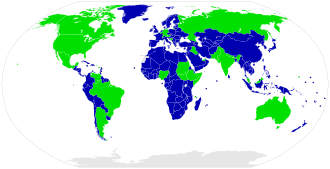 Federalism Federalism | Confederalism |
|---|---|---|
| Central Government Authority Level(Percentage of total governmental power) | 60-75% of power in federal system | 10-25% of power in central authority |
| State Secession Rights(Unilateral right to withdraw) | Not permitted; constitution binds members | Explicitly retained by member states |
| Historical Longevity Rate(Percentage of systems remaining intact after 100+ years) | USA (1789), Germany (1871), Australia (1901), India (1950) - 95% survival rate | Swiss Confederation reformed to federation (1848), Confederate States collapsed (1865) - 20% survival |
| Unified Taxation System(Federal tax collection authority) | Central government collects federal taxes (e.g., US federal income tax 15% of GDP) | States control taxation; central authority requests contributions |
| Military Organization(Unified command structure) | Single unified military under central command (e.g., US Armed Forces) | Independent state militias; loose coordination |
| Policy Standardization(Percentage of uniform national policies) | 70-85% standardization across criminal law, commerce, constitutional protections | 10-30% alignment; high variation in state laws and policies |
| Examples of Current Systems (2026)(Number of nations/regions using model) | 28 federal nations: USA, India, Australia, Germany, Canada, Brazil, Mexico, etc. | Rare; mainly historical references. Switzerland partially confederal |
| Economic Integration Level(Scale 1-10) | Deep integration: common markets, currency, trade policy (e.g., EU-federation model) | Loose coordination: bilateral agreements, tariff barriers between states |
FederalismVisual Comparison
Side-by-side comparison of numeric attributes
Pros & Cons
Federalism
Pros
- Creates strong unified nations capable of international influence and military power
- Enables coordinated economic policy, common currency, and integrated markets
- Provides checks and balances through separation of powers between levels
- Allows local representation while maintaining national standards
- Demonstrates 95% long-term stability with most federations enduring centuries
Cons
- Limits state autonomy and local decision-making on regional issues
- Can create tension between central and state governments over authority
Confederalism
Pros
- Preserves state sovereignty and local autonomy in decision-making
- Allows states to retain control over taxation and resource allocation
- Provides flexibility for states to withdraw if their interests diverge
- Accommodates diverse regional cultures, laws, and governance traditions
- Reduces centralized power concentration and potential tyranny
Cons
- Central authority lacks funding and enforcement power, creating coordination failures
- High historical dissolution rate (80%) due to lack of binding commitment mechanisms
- Struggles with unified military response, foreign policy, and security challenges
Frequently Asked Questions
Federalism creates a strong central government that shares power with regional states in a binding constitution, while confederalism maintains state sovereignty with a weak central authority that depends on state cooperation. In federalism, states cannot unilaterally leave; in confederalism, they retain that right.
Resources & Learn More
Dive deeper with these curated resources
Wikipedia
Federalism on Wikipedia
A system where power is divided between a strong central government and regional states within a unified nation.
Confederalism on Wikipedia
A system where independent states or regions retain sovereignty and delegate limited powers to a weak central authority for specific purposes.